

Dubai has hundreds of moving companies competing for your business, and honestly, not all of them are what they claim to be. Every year, people lose money or belongings to movers who quote low then change the price on moving day, or who take a deposit and go quiet. Most of this is avoidable if you know what to check before you sign anything.Here's how to actually vet a moving company in Dubai, the red flags to watch for, and what to do if things still go wrong.
Don't Start With the Cheapest Quote
It's natural to compare movers on price first. But in Dubai, an unusually low quote is one of the most common ways people get burned. Either the price jumps once your things are already on the truck, or the "company" behind the quote has no real license, no insurance, and nobody to hold accountable if something breaks or goes missing.A better approach: filter for legitimacy first, then compare prices among the movers who actually pass that filter.
Step 1: Check the Trade License (DED/DET)
Any legitimate mover in Dubai holds a trade license from the Department of Economy and Tourism (still commonly called DED). This one check alone rules out most of the risky operators, since companies with something to hide usually avoid paperwork.
How to check it yourself:
1. Ask the company for their trade license number and a copy of the certificate.
2. Go to the DET/DED e-Services portal or the Invest in Dubai website.
3. Search using the license number or the exact registered company name.
4. Make sure the license is active (not expired or suspended) and that it actually covers moving, relocation, or logistics as a business activity. Once your mover is verified, the next thing to sort is your own paperwork. Our guide on documents you need before moving house in Dubai walks through Ejari, NOC, and DEWA requirements in full.
For a full breakdown of what an active license actually covers, how it differs from insurance, and what you risk if you skip this check, see Licensed vs Unlicensed Movers in Dubai: What You Risk.
Red flags:
1. They dodge the question when asked for a license number.
2. They only operate through a personal mobile number and WhatsApp, with no office you can actually find.
3. The license comes back expired, suspended, or registered under a totally different type of business.
Step 2: Ask for Real Proof of Insurance
Almost every mover says they're insured. Fewer can actually prove it. Someone telling you "we're fully covered" isn't insurance. A certificate is insurance.
What to ask for:
1. A copy of their current insurance certificate, not just a verbal assurance.
2. Whether it's full value protection or just basic liability (the payout difference if something's damaged is huge).
3. How their claims process actually works: how you file a claim, how long it takes, and roughly what percentage get approved.
Red flags:
1. Vague lines like "we're fully insured" with nothing to back it up.
2. "We've never damaged anything" used as a stand-in for actual proof.
3. Coverage that turns out to be a tiny per kilogram payout rather than real value protection, only discovered after something's already broken.
Step 3: Get at Least 3 Written Quotes
A mover who's serious about the job will want to see your home or office first, either in person or on a video call, before giving you a number. A full household move quoted over a two line WhatsApp message is a guess, not a quote. And guesses are exactly where price disputes come from later.
A proper quote should include:
1. A breakdown by task: packing, loading, transport, unloading, unpacking, disassembly and reassembly
2. Whether packing materials are included or billed separately
3. Possible extra charges: no elevator, long carry distances, parking permits, weekend surcharges
4. One clear total, not a range
Red flags:
1. No home survey offered, especially for a villa or office move.
2. One lump sum number with no breakdown.
3. A quote that's noticeably lower than two or three others for the same job. This is one of the clearest signs of a bait and switch, where the price changes once your belongings are already loaded.
Step 4: Actually Read the Contract
This is the step most people skip because moving day is stressful and they just want it done. It's also the step that protects you most if something goes wrong.
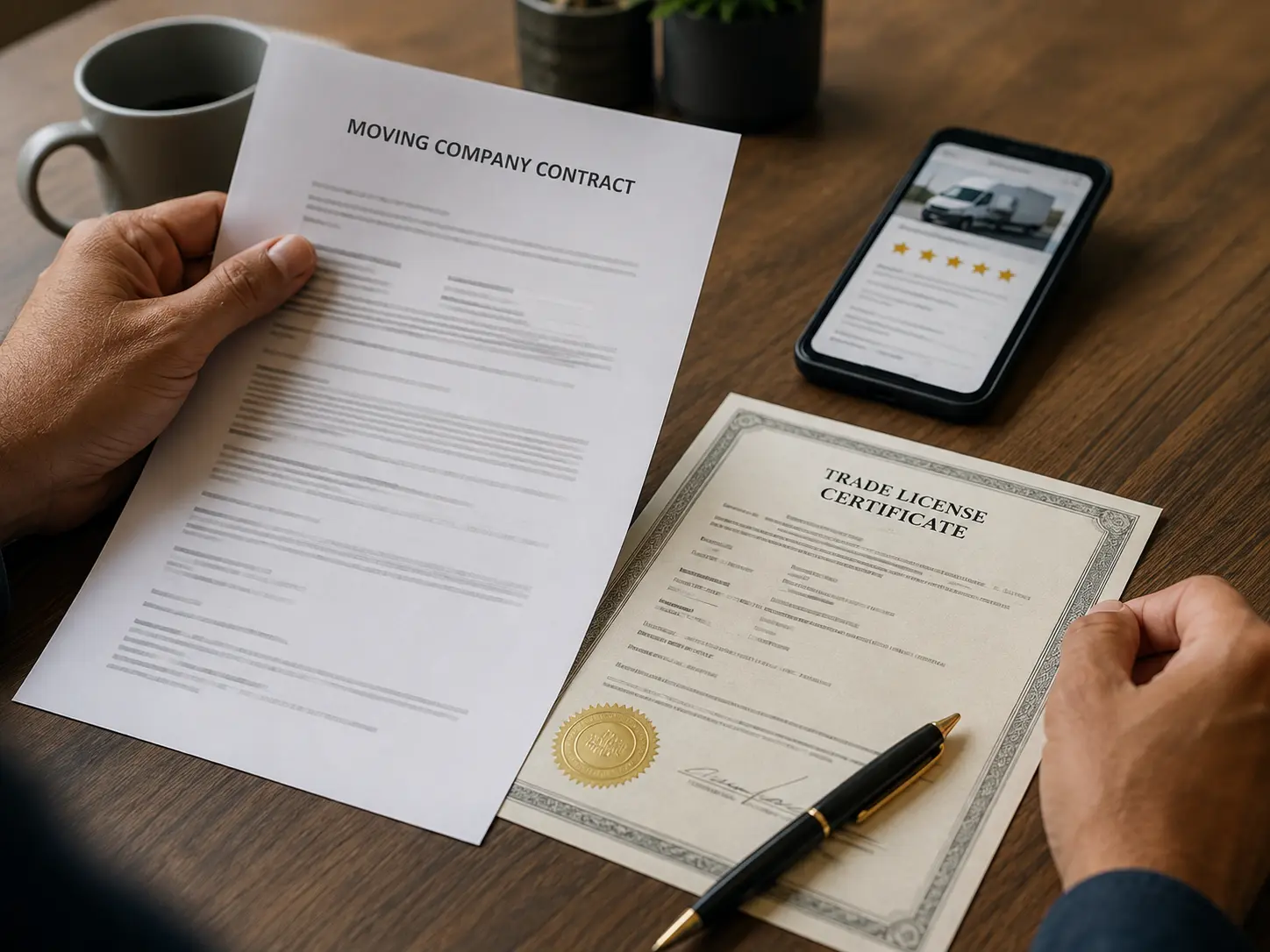
Check for:
1. Payment terms. Legitimate companies in Dubai usually take payment on or after delivery, not a big chunk upfront. Be wary of anyone asking for full payment before the truck is even loaded.
2. A cancellation and rescheduling policy, in writing.
3. The agreed price matches what you were quoted.
4. Liability and claims terms spelled out, not left as a verbal promise.
5. The company's trade license number printed on the contract.
Red flags:
1. Pressure to pay a large deposit before any work starts.
2. No written contract at all, just a verbal agreement or a casual invoice.
3. Refusing to unload your things unless you pay an unquoted "extra fee" on the spot. If this happens, don't pay under pressure. Document it with photos and video, and contact Dubai Police's economic crime division or DET consumer protection instead.
Step 5: Ask About Their Packing Standards Before Moving Day
The way a company talks about packing tells you a lot about how they'll treat your things.
Ask to see:
1. Photos or a short portfolio from real jobs: wrapped furniture, crated artwork, boxed glassware.
2. Whether they keep an itemized inventory list while loading. This matters a lot if you ever need to file a claim.
Red flags:
1. Vague, generic answers when you ask how they pack fragile items.
2. Using old newspaper instead of proper packing paper. The ink transfers onto your things and it's a sign of cut corners.
3. No inventory list offered, meaning there's no record of what actually got loaded if something goes missing.
Step 6: Read Reviews Like You Mean It
Reviews help, but only if you read them properly. A perfect five star average made up of generic, one line reviews is actually a weaker signal than a slightly lower rating with detailed, specific feedback.
How to check properly:
1. Look at Google Reviews and independent directories, not just the testimonials on the company's own website.
2. Look for patterns, not one off complaints. Any company can get one bad review. Repeated complaints about damaged items, ignored calls, or price changes on the day are a different story.
3. See how the company responds to negative reviews. Silence or defensiveness tells you something too.
Red flags:
1. A sudden burst of near identical five star reviews in a short window (a classic sign of bought or incentivized reviews).
2. The same specific complaint showing up across multiple reviewers.
The Full Red Flags Checklist
1. No trade license, or won't share the number
2. No real proof of insurance
3. No home or video survey before quoting
4. Quote noticeably lower than everyone else for the same job
5. No written contract, or one missing key terms
6. Wants a large deposit before the move
7. Vague about packing materials and process
8. No inventory list kept during loading
9. Only reachable by personal mobile or WhatsApp, no real office
10. A sudden wave of generic five star reviews
11. Pressure to book right now, no time to actually read the contract
What It Looks Like When It Goes Wrong
Over the years, Dubai media has reported on relocation companies that took upfront payment for international shipments and then delayed, mishandled, or lost the shipment altogether, leaving people chasing their own belongings for months. These cases tend to follow a pattern: an attractively low quote for an overseas move, a big payment collected upfront, then the communication slowly falling apart once the money's cleared.
This isn't meant to scare you off moving in Dubai. Most moves go completely fine. But it's a good reminder of why the checks above matter most for bigger or international moves, where there's more money on the line and it's harder to get it back if something goes wrong.
Moving Overseas? Check Even Harder
If you're shipping things abroad rather than moving across Dubai, the stakes go up. International shipments take longer, involve third party freight handlers, and you lose visibility once your things leave the country. That gap is exactly what scam operators have historically taken advantage of.
For international moves specifically:
1. Confirm the company handles the shipment directly, rather than passing it off to an unnamed freight partner.
2. Get a specific delivery timeline in writing, not "a few weeks."
3. Avoid paying the full amount upfront. A deposit with the balance due on confirmed delivery is safer.
4. Ask who the destination country partner or agent is, if there is one.
If You've Already Been Scammed
If you think a mover in Dubai has scammed you:
1. Document everything. Photos, videos, all written communication, and your contract.
2. Don't pay unauthorized charges under pressure, even if your things are being held.
3. Report it. Contact the Dubai Consumer Protection Section at DET/DED, and for serious cases, Dubai Police's economic crime division.
4. Leave a detailed, honest review. It's one of the most effective ways to warn other people, and it often gets a faster response from companies that actually care about their reputation.
A written contract, a deposit receipt, and saved messages are your strongest protection if this ever needs to go further.
What You Can Expect From Us
Everything on this list is something we hold ourselves to. A valid, checkable Dubai trade license, real insurance documentation, home surveys before we quote, itemized written contracts, and a payment process where nothing gets collected upfront without being clearly explained. If you want to check any of this yourself before booking, go ahead. We'd rather you check than just take our word for it.
Frequently Asked Questions (FAQs)
How do I check if a moving company's license is real in Dubai?
Ask for their trade license number and look it up on the DET/DED e-Services portal or the Invest in Dubai website. Confirm it's active and actually covers moving or relocation.
Is it normal for movers to ask for a deposit in Dubai?
A small deposit is reasonable. A large upfront payment, especially the full amount before the move even starts, is a red flag. Legitimate companies usually take payment on or after delivery.
What's the safest way to pay a moving company?
A documented deposit if needed, with the rest due after delivery, and always get a written receipt. Avoid cash only deals with no paper trail.
How do I report a moving scam in Dubai?
Contact the Dubai Consumer Protection Section at DET/DED, and for serious cases, Dubai Police's economic crime division. Keep your contract, receipts, and messages as evidence.
Are cheap movers in Dubai always a scam?
Not always. But a quote that's noticeably lower than several other detailed quotes for the same job is one of the most consistent warning signs in Dubai moving disputes. Take it as a reason to look closer, not a reason to book right away.